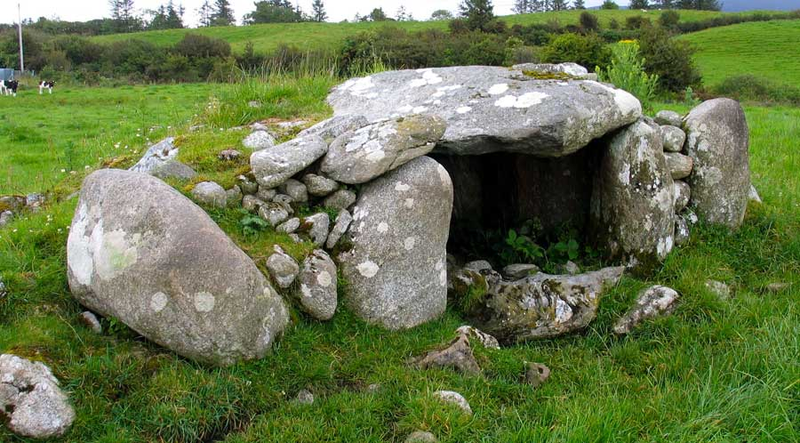
Irish wedge tombs are the youngest type of stone age monuments found in Ireland. They appear to date to the bronze age and were used as burial chambers. Wedge tombs are often found close to other kinds of megalithic monuments. The bronze age begins in Ireland around 2,500 BC when the Yamnaya tribes swept across Europe, replacing the neolithic farmers. It seems that bronze age warriors intermarried with neolithic women, and adopting neolithic customs and burial practices. Many bronze age burials took place in existing neolithic monuments like those at Carrowmore and Carrowkeel, and offerings of potter were often placed in these monuments. The largest concentration of wedge tombs in Ireland is found in the Burren in County Clare. Some of the finest examples are found at Ballyedmonduff in County Dublin, Labbacallee in County Cork, Drumcliffe in County Sligo, and the large collection at Parknabinna in County Clare.